

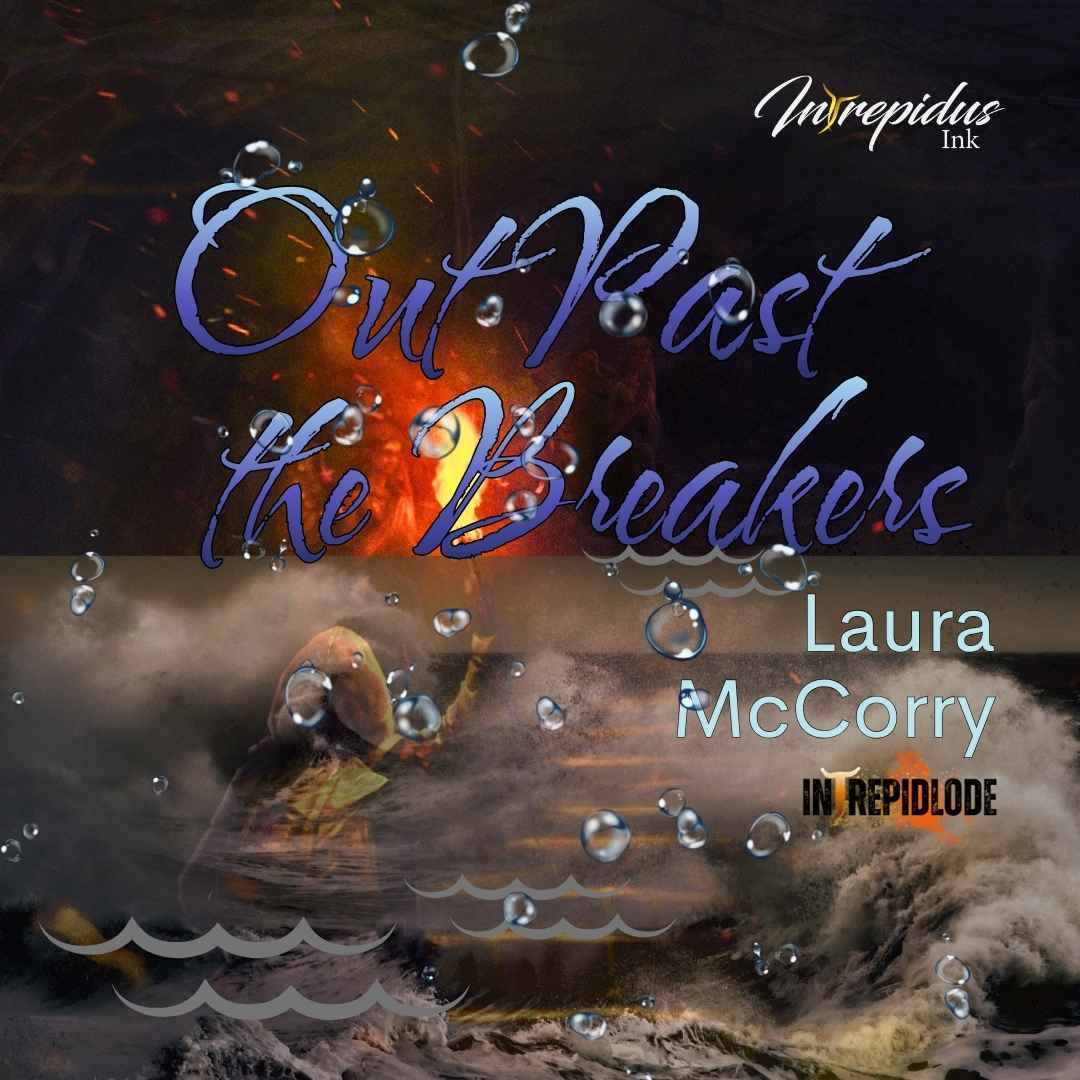
Speculative Fiction
Eva’s breathing grew labored as she climbed the seventy-two steps to the lighthouse’s lantern room. The village doctor had told her once that she had a weak heart. Things will be harder for you than they are for others, Eva. Only it never felt like her heart.
She stood panting at the top. From inside the glass lens, Papa looked as tall as a giant. He poured more cleaning spirits on his cloth and rubbed it round and round, polishing. Together, they wiped clean the hundreds of prisms.
The wind battered the gallery windows. Out past the breakers were spots of movement—dark patches under the waves that could be seals. Eva leaned against the glass, squinting to see better, envying the effortless way they glided through the water. If only that were her life—wild, communal, free.
“Careful, Eva,” Papa warned.
She wiped away the spot. A smudged fingerprint could be magnified a hundred times or more, dimming the light.
Eventually, Papa went down to meet the monthly supply ferry. Eva moved outside to clean the windows, tying a straw bonnet under her chin.
The warm sun dipped low into late afternoon. She pushed back the brim of her hat and wiped her brow. Next month, she’d finally take the ferry across the bay and go to school even though she was almost grown. Papa had always overseen her schooling, but she’d begged and pleaded until he relented. Now she’d get to meet the teacher, and the other students, and read more books than the tattered eight on her windowsill.
The access door at the top of the stairs slammed open. The woman she was told to call ‘Mother’ two summers ago crossed the gallery in long strides. Her fist cuffed Eva’s ear lightning fast.
“You’ll get freckles, girl, and they’ll say we let you run wild. It’s bad enough you’re a keeper’s daughter.” Mother pointed to the bucket and mop she’d left in the lantern room. “Have it done in time for tea.”
She stalked back to the staircase, leaving Eva alone.
Eva swallowed the lump in her throat. It was a sea-smoothed stone that drifted down to land among others, deep in her belly. She was weighted like the light—anchored to the island, and these two she called Mother and Papa, but not for much longer.
She went back inside to mop, but her arms were already tired from passing the washing through the wringer and hanging it to dry on the leeward side of the cottage. The bucket fell from her hands. She lunged for it, struggling against the weight of the water. It sloshed over the sides, soaking the floor.
Eva slipped and fell, a lightning strike of pain ricocheting through her ankle. Water pooled near the base of the lens, and her stomach clenched tight. If it seeped inside, it would damage the copper fittings of the wicks.
Pushing up to her knees, she sent the mop forward and dragged it back, drawing water away from the lens. Her soaked skirt plastered to the floor, hindering her movement. Her ankle throbbed. She wrung out the cold, dense fibers with her bare hands over the bucket, grateful that water never hurt her skin. Her knuckles didn’t turn stiff and red like Mother’s did.
Again and again, she heaved the mop forward until at last, water no longer surged toward the light. Exhausted, she collapsed on the damp floor. The light was ready for darkness.
#
The sun was setting when Papa found her.
“I’m sorry,” were the first words out of Eva’s mouth, even though her teeth chattered together so violently she worried they would break.
His eyes landed on the bucket and mop. The cleaning rags in a pile. Then drifted to Eva propped against the wall, trying to make herself small. Papa’s mouth flattened into a grim line.
“It’s me who’s sorry,” he said.
Papa carried her down the stairs in his big arms. They were silent for a long time except for the sound of his footsteps echoing. The stairwell grew darker as they descended, and a memory surfaced—of the deliciously cold surf and a warm body that pushed Eva onto the island’s narrow beach.
The memory filled her senses, overlaying Papa tucking her into bed.
Outside her bedroom, they were fighting again. Eva covered her ears, but it wasn’t enough to drown out their voices.
“She can’t go to school, not now,” said Mother.
Papa defended her, the way he always did. “That’s all she wants. It would crush her to put it off any longer.”
“We don’t all get what we want,” Mother snapped, equal parts frustrated and righteous. “Now there’s a baby on the way, she needs to do her part. You know this life is hard enough.”
It was Eva who cleaned the light with Papa and mopped the tower floor. Eva’s knees callused and covered in dirt from working in the garden. Eva’s hands constantly submerged, washing, cleaning, scrubbing in the never-ending onslaught of dirt and salt.
And now there would be a baby.
Papa was quiet. He worked as hard as a mule himself, but there was always more work to do on their island.
The walls loomed closer, Eva’s tiny, dark room becoming even tinier, even darker. Her life shrunk down to the size of an empty hazelnut shell, cracked open, something inert and sea-polished. A bauble, not a bloom.
There was a knock at her door. A shaft of light and then the weight of Papa sitting on the end of her bed.
“Are you awake, Eva?” he asked.
She didn’t answer. It would take too long to climb out of the hazelnut shell.
“Maybe next year you can go to school,” said Papa. “Another year to grow strong.” His voice was both near and far at once.
It’s not a matter of more time, Eva wanted to say.
They were together, but drifting further apart every second. She swam against the current in her mind, but she couldn’t reach him.
“You were so small when you came to me. I wanted to keep you. Protect you.” His voice cracked with emotion. “I thought love was enough to change you…”
Eva already knew, but now it was undeniable. It wasn’t her heart that was weak. It was the effort of trying to thrive in a world that wasn’t made for her, where she could only ever subsist.
The truth was a splintered piece of wood that refused to sink. She didn’t belong. Maybe she would never belong.
Papa smoothed her hair, and his familiar touch almost brought her back. Eva couldn’t rouse herself to even open her eyes. She wanted to remember him like this.
Papa turned the handle as he closed her door so it barely made a sound.
The cottage door thudded shut as he went outside.
In her mind’s eye, Eva saw him climbing the seventy-two stairs to the light. The way he would pat the sandwich in his pocket to reassure himself it was still there. How was it possible to know someone so well and not be known in return?
Memories swirled, threatening to overwhelm her. She kept going round and round, wiping at all the smudged places until she was ready for darkness.
Ready to leave tonight.
#
The lighthouse shone through her bedroom window. Eva’s long white nightgown glowed against her dark wool blanket. Wind rushed across the machair, and rain pelted the sides of the house, drumming against the flat top of the cistern. Waves pushed the swell of the ocean against the rocks, crashing over the island. Waves crashed against the rocks, salting the garden so it never produced as much as they needed, and nothing grew at all in the far corner.
The light swung and flashed straight through her. Something had been taken from her.
Now that she remembered how she’d arrived, her skin prickled all over, and her stomach flopped like a fish on land. It would be buried nearby. She could leave as soon as she found it.
In the sitting room, her boots were warm and dry from the hearth. She went to the window and counted the seconds until the light swung around again.
It flashed bright and terrible. Everything looked strange: the white pebble path to the garden, the black boathouse near the shore. Out past the rocks, the sea was unfathomably dark, and the storm howled.
Papa was out there, high above her, tending the light. He’d kept her there, trying to make her into something she wasn’t. She loved him, but she was angry, too, her emotions swirling like the kaleidoscopic patterns of oil on water.
Behind her, in the other bedroom, Mother snored. If Eva was a light, Mother’s fingerprint had smudged the lens of her deepest self. Eva hadn’t known it was there for so long. Now she ached to wipe it away. How bright might she shine, without it?
She would reclaim her truth tonight. Wash herself clean. Start over in a new place.
It terrified her and filled her with hope, all at once.
Another sound overlaid the crash of the storm. She strained to hear it: two notes or three, too high to be a ship’s horn.
There was someone else awake in the night, out on the water.
The tiny snatch of music keened again, calling her.
It was time to brave the storm.
Eva walked past her oilskin slicker hanging on a hook—she wouldn’t need it. Her hands shook as she pulled the front door closed behind her, forcing the latch. She prayed that Mother would stay asleep.
Sea spray hit her in the mouth, and she wiped the rain from her eyes. She couldn’t see the path, but her feet knew where to go.
The light swung. What she needed—the piece of her past, the key to her future—had to be in the garden, in the corner where nothing grew.
Eva fell to her knees in the dirt. She scooped out the sandy earth with her hands. It pushed under her fingernails and fell away in clumps, the hole growing deeper.
Her fingers struck wood: a box. She pried it loose and jostled it to the surface.
In darkness, she opened it, and the lid yielded right away. Too easily for something buried for years. When the light swung over her shoulder, her stomach dropped out.
The box was empty.
The cottage door slammed, then blew open again, but Eva had been sure to close it. Yellow light spilled out of the empty sitting room, a picture postcard of everything familiar, now obscured by the driving rain.
Eva stumbled forward. If Mother knew… if she’d gone to the garden before the storm…
The light swung and caught a figure rounding the corner of the cottage.
Eva ran after her, clutching at the sudden pain in her ribs. Past the cistern, past the washing lines, and down to the machair, following the glimpses of Mother illuminated by the light. She was headed for the beach.
Eva ran until her chest felt like it would explode. Through the cloying tall grass, scrambling over slick boulders at the water’s edge. She doubled over, panting as she landed on the narrow, crushed shell beach ahead of Mother, wearing a long oil slicker.
“I won’t let you cast it into the sea,” Eva yelled into the space between them. Every nerve in her body vibrated, warning her that what she was doing wasn’t safe. But her freedom dangled in Mother’s hands, a dark material glinting with every flash of lightning and lighthouse beam. All she had to do was take it.
“Careful, Eva.” Mother’s voice was steely, but her eyes darted from side to side. “You shouldn’t work yourself up like this.” Despite her hood, Mother’s drenched hair stuck to her face in clumps.
She wasn’t made for the storm. Not like Eva.
“It’s mine,” said Eva, though her chin wavered. “Give it to me.”
With the full power and fury of the storm behind her, Eva raised her arms. The tide surged without crashing over her. Sparkling droplets landed as soft as dew on the fine hair of her arms. The ocean was hers to command.
Eva walked forward on tingling legs, crowding Mother inland.
“We’ll go inside,” squeaked Mother. “Get dry and have a chat.”
Eva shook her head.
Mother scrambled backward and landed in a patch of sand, quaking with fear.
Something twisted in Eva’s gut. It didn’t have to be this way. She hadn’t wanted to dominate or coerce. Only to claim what was rightfully hers.
She reached down and plucked the seal skin from Mother’s fingers.
The light swung over the island. The music came again, louder than the roar of the ocean.
There were others like her, waiting for her. Would Papa hear it? Would he understand?
She pulled the sleek material over her head, dark and speckled like the night sky.
This was her life. It fit her seamlessly.
It was the easiest decision she had ever made.
Eva threw herself off the rocks and into the sea.
Author Bio

Laura McCorry is a writer and sourdough enthusiast who lives outside of Washington, DC. Her work is forthcoming in Black Sheep Magazine and has appeared in Breaking Into the Craft and Poetry Quarterly. IG, @lauramccorrywrites.
Share This Story
Facebook
Twitter
Pinterest
Reddit
Email
Latest Submissions